8/30/26
Jay C. Brandriet
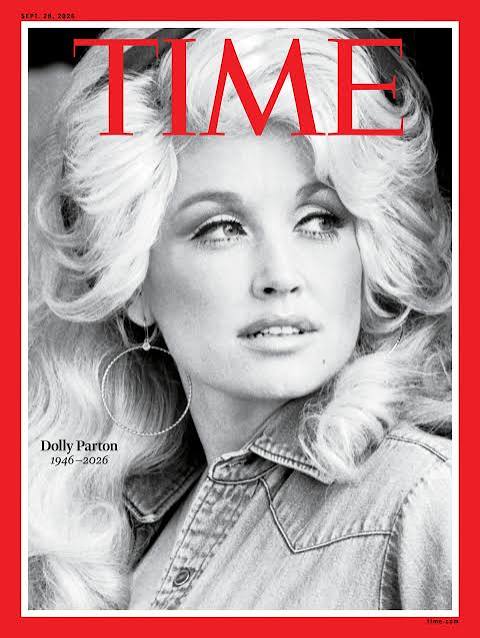
As we said goodbye to Dolly Parton this last week, it delivered a unique result.
I immediately saw a 75-year-old woman and 12-year-old boy breaking down the news.
They were strangers.
They were equally invested in the conversation, and in harmony with how they saw Dolly’s relevance.
Naturally, I had to chime in.
The first post I saw was from Lya Wodraska.
It said,
“Apocalypse draws near as last remaining universally beloved human being passes away.”
I thought about that for a minute.
I found it crazy someone could be “universally” liked or loved.
Somehow this fit.
That night I watched people from all races, religions, and different political beliefs come together.
They all said the same thing.
Dolly Parton was one of the most loved and respected people that’s ever lived.
Everyone agreeing on someone was wild.
Leave it to the “Queen of Country” to be the glue here.
MY FIRST MEMORIES OF DOLLY
Dolly had an angelic voice.
She was the face of glamour femininity and womanly power at the same time.
Parton was sharp, beautiful, and had zero filter.
She was like a sparkling symbol of authenticity.
Dolly was also a movie star, who seemed to belong everywhere.
Her songs make me think about my family, extended family, friends, and even locations.
Dolly is one of those artists that reminds me of my life.
Some of its longevity.
Most of its the way her songs have landed in my memories.
The energy of “9 to 5.”
A mood shifter like “Hard Candy Christmas.”
There’s no better content than “Coat of Many Colors.”
How about the feisty sound of “Two Doors Down?”
“The chemistry of “Islands In The Stream.”
“You Know That I Love You” is an underrated gem.
My personal favorite, “Here You Come Again.”
How about the juice “Jolene” provides?
Dolly wrote that and “I Will Always Love You” in the same day.
It’s easy to believe that about someone who had been writing and playing music since age 7.
Parton had written over 3,000 songs.
SHE WAS ON HER TOES
Dolly took the loud reputation of her breast size and turned it into her own diverse comedy tools.
Elvis Presley wanted to record “I Will Always Love You.”
As blown away as Dolly was, she understood the importance of her publishing rights.
She had her own publishing company.
The day before Elvis was going to record, Dolly had to stand her ground against “The Colonel.”
He had demands that were not smart for Parton long term.
Dolly’s self-discipline and growing business savvy is why she painfully had to decline.
What she did instead is wait a couple of decades, allow Whitney Houston to take the song to a new stratosphere, cash in like a boss, and then give it back to planet earth.
Dolly’s cash and book donations are in the hundreds of millions.
Have you seen the interview where Barbara Walters is insulting to Parton on four consecutive questions?
Dolly didn’t just rise above it; she towered above Walters.
Howard Stern asked her about men in the business trying to influence her in a variety of ways in which Dolly responded, “It’s difficult for them. I look like a woman, but I think like a man.”
Elizabeth Banks said, “In show business, she is the ONLY person anyone should aspire to be.”
THE LOVE AND RESPECT
I watched Dolly answering dozens of questions from a “Donahue” audience in the mid 1980s.
One young lady asked her a simple, broad-brush question about getting into the music business.
In a sea of people and questions, on a quick production clock, Parton said, “are YOU trying to get into the business?”
Even in a setting where it would be natural and encouraged to hurry and answer, Dolly seemed to see all people.
When asked if she helped her then 61- and 62-year-old parents financially she said,
“As long as I make a dime, mama and daddy have a nickel. If they want the dime, they can have that too.”
In a late 1970’s interview she stops mid-sentence and says, “I work hard at being happy.”
Dolly Parton was so good at being herself, she nourished the world.
Jay C. Brandriet

